

🇮🇹 Leggi questo articolo in italiano
Barry Greene’s first guitar was made of plastic. It was called a Zim Gar, and the year was 1971: he was ten years old and had no idea what jazz was.
Many years later, asked whether the essence of this music can really be taught, he answered with an image that has stayed with us. Do you remember how it felt to hear yourself play a G chord? That, he says, is where we should stay. In that wonder.
It is a simple thought, almost naive. And yet, to understand why a university professor with dozens of published methods puts it at the center of everything, we have to go back to that boy.
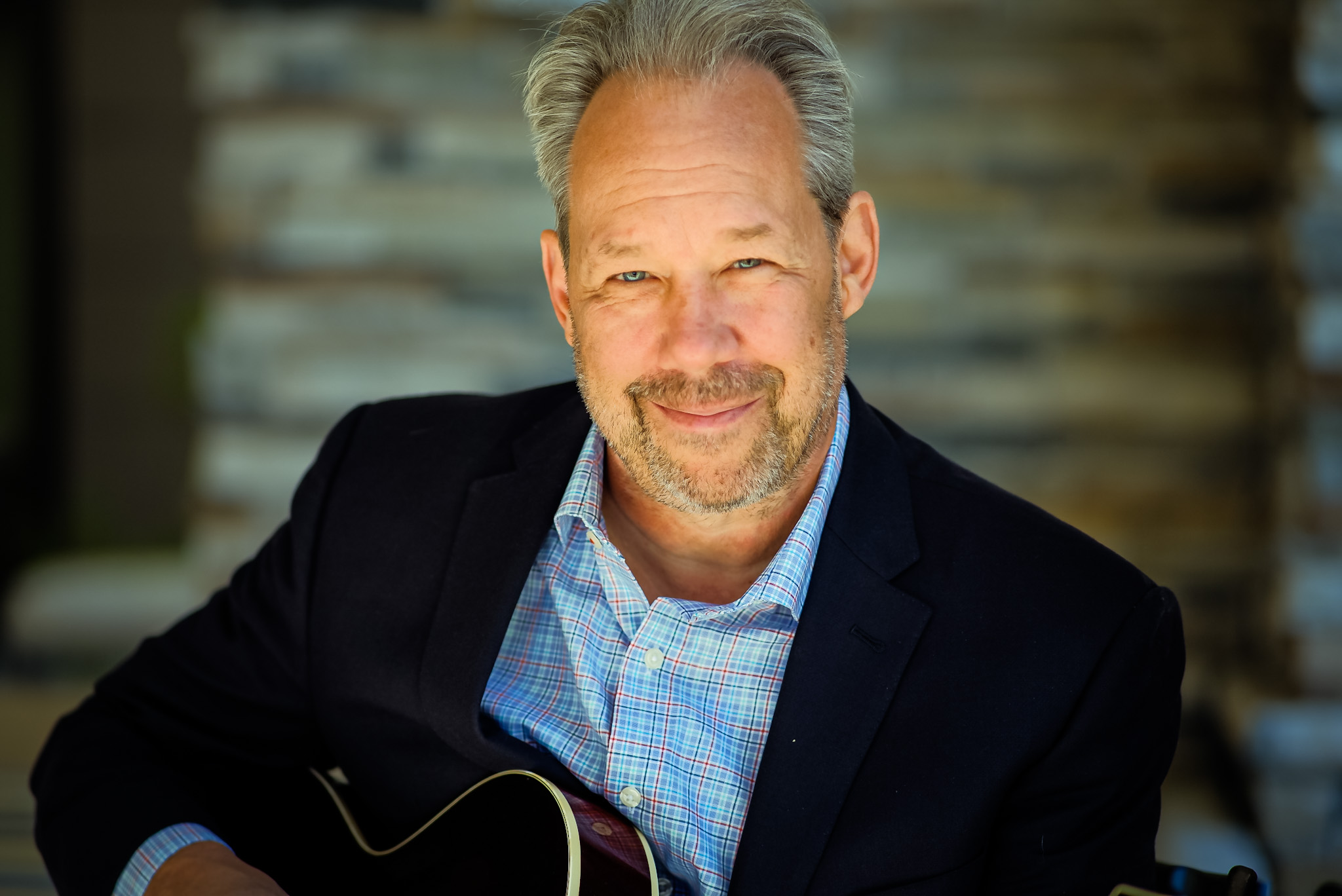
A New Jersey Kid Who Skipped School
Barry Greene was born on July 31, 1961, and grew up in North Bergen, New Jersey, a few miles from Manhattan. In the Sixties he listened to the Beatles, in the Seventies to Led Zeppelin. Jazz came late, in high school, at the end of the Seventies.
And it was not love at first sight. By his own account he was hardly a model student: he skipped classes to stay home learning Aerosmith songs, and there was not much else he felt good at besides music.
Then one day he heard Joe Pass, George Benson and Pat Martino. His reaction was not ecstasy but disbelief: a human being could play the guitar at that level, and without hiding behind distortion. He did not love the music yet. But he felt the need to try to play the instrument that way.
It is a subtle distinction, and an honest one. First comes the challenge of the sound, then the love for the language.
In 1979, after high school, he enrolled at Berklee College of Music. He later earned his degree from William Paterson College in New Jersey, and by twenty he was already a working professional. He played, worked, piled up gigs. At thirty he took stock: there was no shortage of gigs, but a hundred dollars a night does not raise a family. He wanted children, health insurance, a pension. He enrolled at the University of South Florida in Tampa, where he was living at the time.
In 1995 he joined the University of North Florida in Jacksonville as a jazz guitar teacher. He taught there for more than thirty years, until his retirement in May 2026. After twenty years, he admitted, he still could not believe the door of his office read “professor Barry Greene”.
Four Masters, One Language
Some people change idols every decade. Not Barry Greene. His references have stayed the same since he was a boy: Pat Martino, George Benson, Wes Montgomery, Joe Pass. What he loves in them is something precise: the horn-like phrasing and the hard swing that never loosens its grip on the time.
If he has to pick one, he picks Benson. For his rhythmic pocket, he says, and because he sings: the voice gives his lines a melodic breath you can hear even when he plays only guitar.
You can hear this lineage right away. His phrases run long, in full, even eighth notes, with an urgency that an American guitar magazine compared to Martino’s finest moments. But beneath the speed there is always an organ-trio pulse, a way of placing notes on the beat that comes straight from Wes and from the blues.
His tone is dark, round, without edges. Russell Malone summed it up this way: great tone, control, musical judgment. Three words that say more than a page of adjectives.
Speed in Service of the Phrase
Anyone who sees him play live for the first time is struck by his fingers. A high school classmate, seeing him again after more than thirty years in a Greenwich Village club, wrote that they move so fast you forget you are watching a real person.
And yet Barry does not like technical music. He says so plainly. Theory, for him, only explains why something sounds good; it should never drive musical choices. He would rather hear a musician who knows nothing about harmony than one who picks notes according to a rule.
This is where his style finds its balance. The harmonic substitutions are there, and they are refined: in his B-flat blues the cadences multiply, passing chords slip in between one bar and the next. But they come from the ear, from years of worn-out records, not from a system. They sound like vocabulary, not like an exercise.
And then there is solo guitar. Barry loves playing alone, even though on long nights he misses the conversation with other musicians. On a stage with no rhythm section, walking bass, chords and melody come from the same hand, in the manner of Joe Pass. He has also devoted a method to this discipline, the Solo Jazz Guitar Method published by Mel Bay.
A Benedetto That Arrived by Chance
 It all began at the Savannah Jazz Festival, where Barry was playing a Gibson ES-165 borrowed from a friend. In the audience was Howard Paul, of Benedetto Guitars. That evening began his relationship with Robert Benedetto’s workshop, which continues to this day.
In recent years he has played the Benedetto Bravo and Pat Martino Signature models, Benedetto amplifiers and Thomastik-Infeld flatwound strings, gauge 14. A choice consistent with his sound: smooth, heavy strings that trade brightness for body and a soft attack, the sound of the traditional archtop.
Looking for the Other Musician on Stage
One of the finest things Barry has said concerns his bandmates. He would rather play with a great accordion player than with a mediocre rhythm section. For him, the success of a night depends entirely on who stands next to you.
Over the years many have stood next to him. Drummer Danny Gottlieb, his longtime colleague at the University of North Florida, with whom he recorded in trio, together with bassist Dennis Marks, a TrueFire course built around a trio session filmed in the studio. Adam Nussbaum, Gene Bertoncini, Kenny Drew Jr., Tim Hagans, Scott Wendholt, Paul Bollenback, Mark Whitfield, Rodney Jones, Russell Malone. In 2018, on the album Resurgence, Jamison Ross is on drums.
The moments he remembers most fondly, though, lasted only a few minutes: the times he got to play with his heroes, Pat Martino and George Benson. And a night on stage with Tommy Emmanuel.
The Return of the Organ Trio
In recent years his voice has found a natural home: the organ trio. With Pat Bianchi on Hammond B3 and Ulysses Owens Jr. on drums he formed a group that has also performed as the 904 Jazz Organ Trio.
It is the lineup that opens and closes Giants, the album released by Origin Records in April 2026 (in Europe the CD is distributed by Challenge Records from October 2) and recorded in October 2025, produced by Owens himself. Barry calls it his most personal recording: a tribute to the guitarists who shaped his voice.
There are two worlds inside it. On one side the organ trio, which brings back the warmth of Sixties clubs. On the other a more unusual quintet, with David Kikoski on piano, Steve Nelson on vibraphone, Marco Panascia on bass and Owens on drums. Piano and vibraphone together, alongside a guitar, are a bet on colors: three harmonic instruments that have to learn to leave each other room.
The repertoire is a map of his roots, chosen far from the obvious tunes. “Backtrack” by Lonnie Smith, “Green Street” by Grant Green, “SOS” and “Jingles” by Wes Montgomery, “Mugshot” by Russell Malone, “El Hombre” by Pat Martino, “Question and Answer” by Pat Metheny. A single original, “In Her Room”, a waltz with a hint of gospel. And a ballad, “My One and Only Love”, for solo guitar.
Critics greeted it with enthusiasm. Roots Music Report called it “one of the finest instrumental jazz albums of the year”; for UK Vibe, which gave it five stars, it is “a masterclass in jazz guitar,” with a voice that is “unmistakably his own.” And more than one reviewer noticed the same thing: Greene does not try to compete with the giants he evokes. He carries on their conversation.
Teaching Backwards
Of the many ideas Barry has put into his books and lessons, one sums up the rest: we teach improvisation backwards, he says.
His ideal path is simple. The student transcribes four or five important solos, memorizes them, plays them along with the record until they become his own. Only then does the talk of theory begin. Using theory as the vehicle for improvisation, he argues, is wrong.
The example he uses is language. None of us thinks about nouns and adverbs while speaking. If we did, we would sound like robots.
Those who study with us in the Circle of Excellence will recognize a family resemblance in these words: vocabulary born from listening and repertoire, rhythm before rules, theory that confirms what the ear has already understood.
The Bandstand Inside the Lesson
There is one thing no classroom can replace, Barry says: getting a real lesson on the bandstand. That is where you discover your weaknesses, and nowhere else.
So he tries to bring the bandstand into private lessons. He changes keys without warning, changes tempo and feel, has students accompany singers, asks them to start and end tunes. Small surprises that train the hardest thing of all: staying a musician when something does not go as planned.
For himself he keeps a small, precious habit. He no longer practices the hours of his twenties: an hour at most, usually playing through a tune. But he tries to make at least one discovery a day. A new substitution, a different way of approaching a chord.
From Books to Screen
His teaching output is vast. For Mel Bay he has published, among others, Solo Jazz Guitar Method, Advanced Jazz Guitar Improvisation and Jazz Guitar Standards/Chord Solos. He then moved to digital self-publishing, with iBooks such as Playing Jazz Guitar: books he can update whenever he wants.
For eight consecutive summers he taught at the National Guitar Workshop in Connecticut. He has performed several times at the Long Island Guitar Show and in Europe, in Germany and France. His early video lessons circulated on Mike’s Master Classes; today they have become Barry Greene Video Lessons, an online platform followed by guitarists all over the world.
He has also made a less common choice: telling the story of his own fragility. In a short digital book, My Life Through Heart Disease and Music, he wrote about his heart disease and open-heart surgery, weaving them into the story of his life as a musician. A sincere account, free of rhetoric, which readers describe as full of hope.
What He Is Building
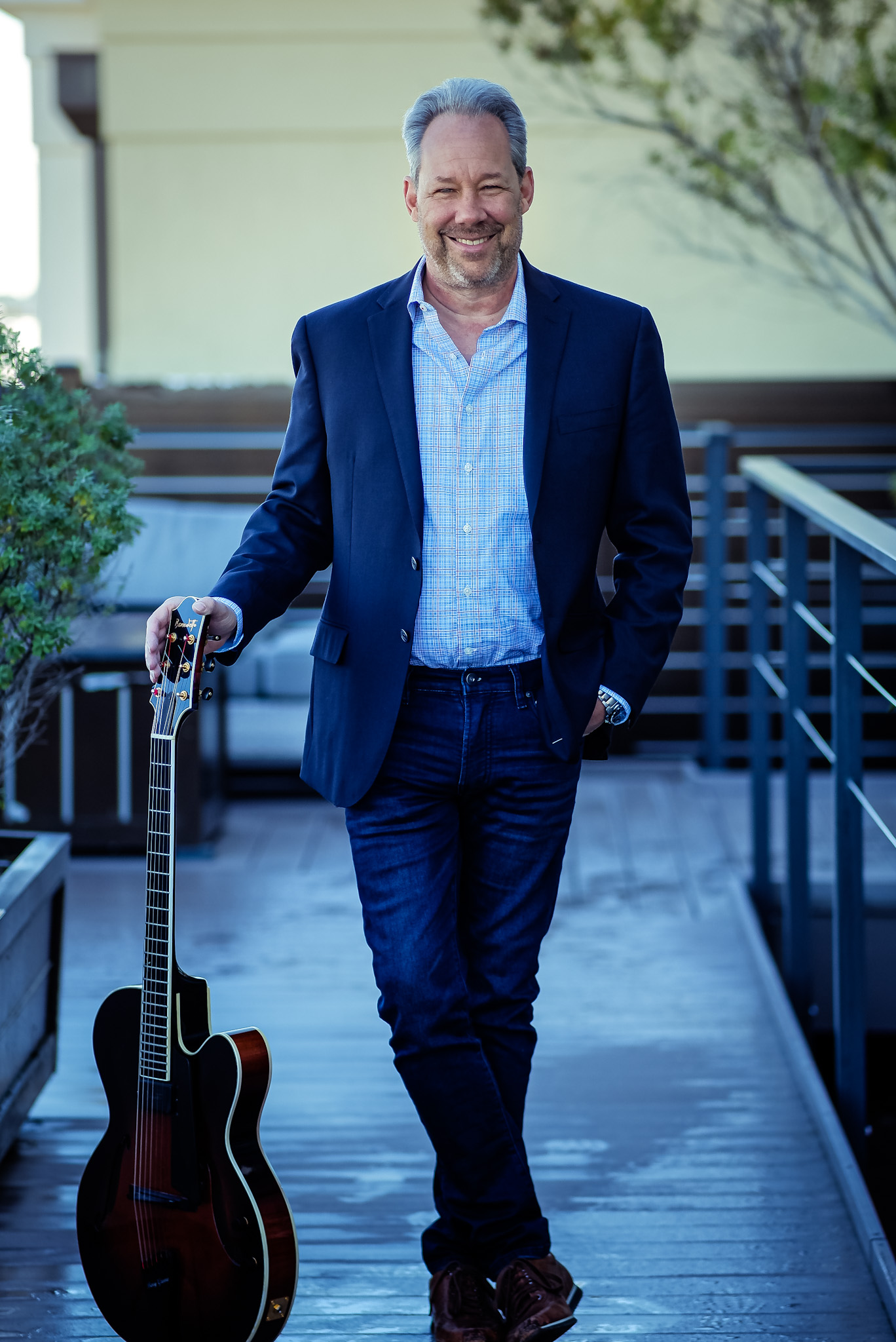
Pat Martino, one of his heroes, called him one of the best, as a player, as a writer and as a teacher. Mike Stern, after a clinic at the University of North Florida, said that all the students raved about Barry.
You can already see the mark he is leaving: in the young players who have passed through his Jacksonville studio and in the thousands of guitarists who meet him in front of a screen. He talks about it with a frankness that makes you smile: with three students out of four, he claims, he can bring out fine musicians.
And his journey is far from over. Giants is the most mature album he has made, yet it sounds like a starting point: having retired from the university in May 2026, Barry is now devoting more time to performing, recording and his video lessons, and taking this music to stages in Europe too.
Why Listen to Him Today
Because in Barry Greene the tradition of American jazz guitar is not a museum. It is a living language, which he speaks with the accent of someone who learned it by ear, record after record, before he could explain it.
Listening to him means hearing how four very different masters, Martino, Benson, Wes and Pass, can live together in a single voice without becoming a quotation. And it means seeing a teacher who never stopped playing, and a musician who never stopped learning.
Then there is that question, the first one in this article. Do you remember how it felt the first time you heard your own G chord?
If the answer is yes, you already know where to start. If it is no, it may be worth asking what has covered it in the meantime.
Recommended Listening
- “My One and Only Love” (from Giants, 2026). Three minutes of solo guitar: bass, chords and melody in the same hand. Listen closely to the inner voices.
- “El Hombre” (from Giants). Pat Martino’s tune in organ trio with Pat Bianchi: long eighth notes, tense swing, the most direct tribute to his model.
- “In Her Room” (from Giants). The album’s only original, a waltz with blues roots and a gospel color.
- “Question and Answer” (from Giants). Almost thirteen minutes on Pat Metheny’s theme, with piano and vibraphone: Barry at his most open and modern.
Essential Discography
- Giants (Origin Records, 2026) – with Pat Bianchi, Ulysses Owens Jr., David Kikoski, Steve Nelson, Marco Panascia. Organ trio and quintet, full maturity.
- Resurgence (2018) – with Jamison Ross on drums. Original tunes recorded in New Orleans.
- Sojourner (Greene Jeens, 1998) – quartet with piano. Urgent bop, in Martino’s wake.
Other albums as a leader: At Home, Urban Jazz, Urban Jazz II, In the Meantime, Barry Greene Trio, The Other Side.
Recommended Videos
- One Finger Snap – Barry Greene Trio, Bar Next Door NYC 12-10-2011 – the trio live in the Greenwich Village club: swing and long eighth notes a few feet from the audience.
- Barry Greene Trio – You’d Be So Nice to Come Home To – a standard in trio, ideal for hearing his tone and phrasing at medium tempo.
- “The Truth About Solo Guitar” – Barry Greene – he explains how he builds a solo guitar arrangement.
- Barry Greene Live Stream 8/9/19 – Desktop concert and Master Class – a home concert alternating with explanations: Barry the musician and Barry the teacher together.
- Barry Greene – Important Steps for a Jazz Guitarist – a conversation with Jazz Guitar Today on becoming a better jazz musician.
Official Website
🌐 Barry Greene’s official website: barrygreene.com
Sources
- Barry Greene, official website – Words and Music
- Barry Greene interview – Jazz Guitar Life (2016)
- Jazz Guitar Life Podcast, ep. 15 with Barry Greene
- Faculty profile – University of North Florida, School of Music
- UNF Jazz Studies Program – Jazz Guitar Today
- Barry Greene – All About Jazz
- Barry Greene – Benedetto Guitars
- Barry Greene, Professor of Jazz Guitar – Jazz Guitar Today
- Giants, one sheet – Origin Records
- Giants – Challenge Records
- Giants, review – Couleurs Jazz
- Giants, review – Paris-Move
- Giants, review – Making A Scene
- Giants – HIGHRESAUDIO
- Talented guitarist Barry Greene comes long way from North Bergen – Daily Voice
- Review of the book on heart disease – Az Samad Lessons
- Jazz Trio Interplay – TrueFire
- Beyond the Frets, episode with Barry Greene
- 904 Jazz Organ Trio – Blue Jay Listening Room
By Eva and Manuel Consigli for La Via della Chitarra Jazz

Scrivi un commento